Showing posts with label #literature. Show all posts

Tuesday, August 18, 2026

Who's Reading and How Much?


People still read books, but how and why they read has shifted in fascinating ways.

Books are still being read widely, but the formats, motivations, and cultural patterns have evolved. In some areas, reading is actually increasing.

Who’s reading and how much?

Print books remain dominant. In the U.S., around 65–70% of adults read at least one print book per year, a number that has stayed surprisingly stable for a decade.

Audiobooks are booming. They’re the fastest‑growing format, with double‑digit growth year after year. People listen while commuting, cleaning, or walking.

E‑books have plateaued but remain strong. Roughly 30% of readers use them regularly, especially for genre fiction (romance, fantasy, thrillers).

Where reading is actually increasing

Young adults and teens are reading more fiction again, driven by BookTok, fandom culture, and serialized storytelling.

Niche genres (mythic fiction, cozy fantasy, romantasy, horror, atmospheric folklore — your wheelhouse) are thriving because they translate beautifully into short‑form video hooks.

Library usage is rising, especially digital borrowing through apps like Libby.

Why people still read

Books offer something other media can’t quite replicate:
Deep immersion
Emotional resonance
A sense of ritual
A break from algorithmic overstimulation
A way to inhabit myth, symbol, and archetype — which is exactly the terrain your storytelling lives in
Reading is becoming less of a default habit and more of a chosen experience, which paradoxically makes it more meaningful.

The non‑obvious insight

People aren’t reading less, they’re reading differently.
Short‑form video hasn’t killed books; it’s become one of the strongest engines driving book discovery.
A 20‑second atmospheric clip can sell more copies than a month of traditional marketing.


Tuesday, January 2, 2018

The Art of Individual Beauty

by Grace Augustine

photo courtesy of istock

2017 ended with a major snow event for those of us in the Midwest. It started snowing at 9 am Dec. 29th and continued off and on throughout the weekend, bringing with it 6 inches of snow. 

As I sit inside looking out at the stillness of the snowfall, I'm reminded of an article I read recently about a photographer who took pictures of snowflakes.  I did a bit of research and below are my findings.

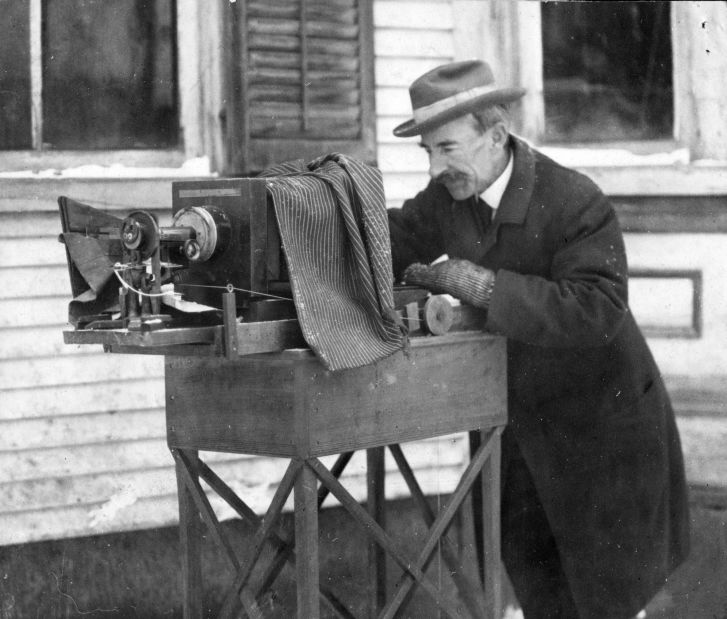
According to an article written by Stella Ko from CNN, Wilson Bentley (an American farmer) was the first to photograph a snowflake.  In 1885, Bentley attached his camera to a microscope and voila...the first snowflake photo was born. The full article may be read at http://www.cnn.com/style/article/evolution-of-snowflake-photography/index.html

In 1885, American farmer Wilson Bentley attached a camera to his microscope and took what is believed to be the very first photo of a snowflake.
photo courtesy of CNN Style

Since Mr. Bentley's beautiful discovery, our tech savvy world has gone viral recently with the snowflake photographs of Russian photographer, Alexey Kljatov. He fashioned a device from a camera lens, wood, screws, and old camera parts. This has produced some of the most fabulous photographs to date of our unique crystalline beauties. Full article and photos at https://www.huffingtonpost.com/2013/12/03/alexey-kljatov_n_4373888.html


photos courtesy of Pinterest

Just as each snowflake has its own beauty, its own unique appearance, its own voice...we all do, too. As humans, we think we want to look just like so and so, or be just like so and so, when in reality, we need to look at our uniqueness and embrace WHO. WE. ARE.

Writing is our art. It is a beautiful expression of our uniqueness. Just as each snowflake is individual and corporate, we are, too. Each of us writes what we know, what is unique to us--yet we are all a part of a beautiful literary world that offers readers great joy in many different genres.